In January, partners from the Leibniz Centre for Agricultural Landscape Research (ZALF) travelled to Karditsa to gather the field data needed to build the DIONYSUS modelling chain.
Hosted by TOEV Tavropou, the visit began indoors with a technical briefing on the local irrigation network and its operating rules, together with a review of the datasets that make quantitative work possible: water abstraction rates, energy consumption, groundwater levels, and the management problems the organisation faces day to day.
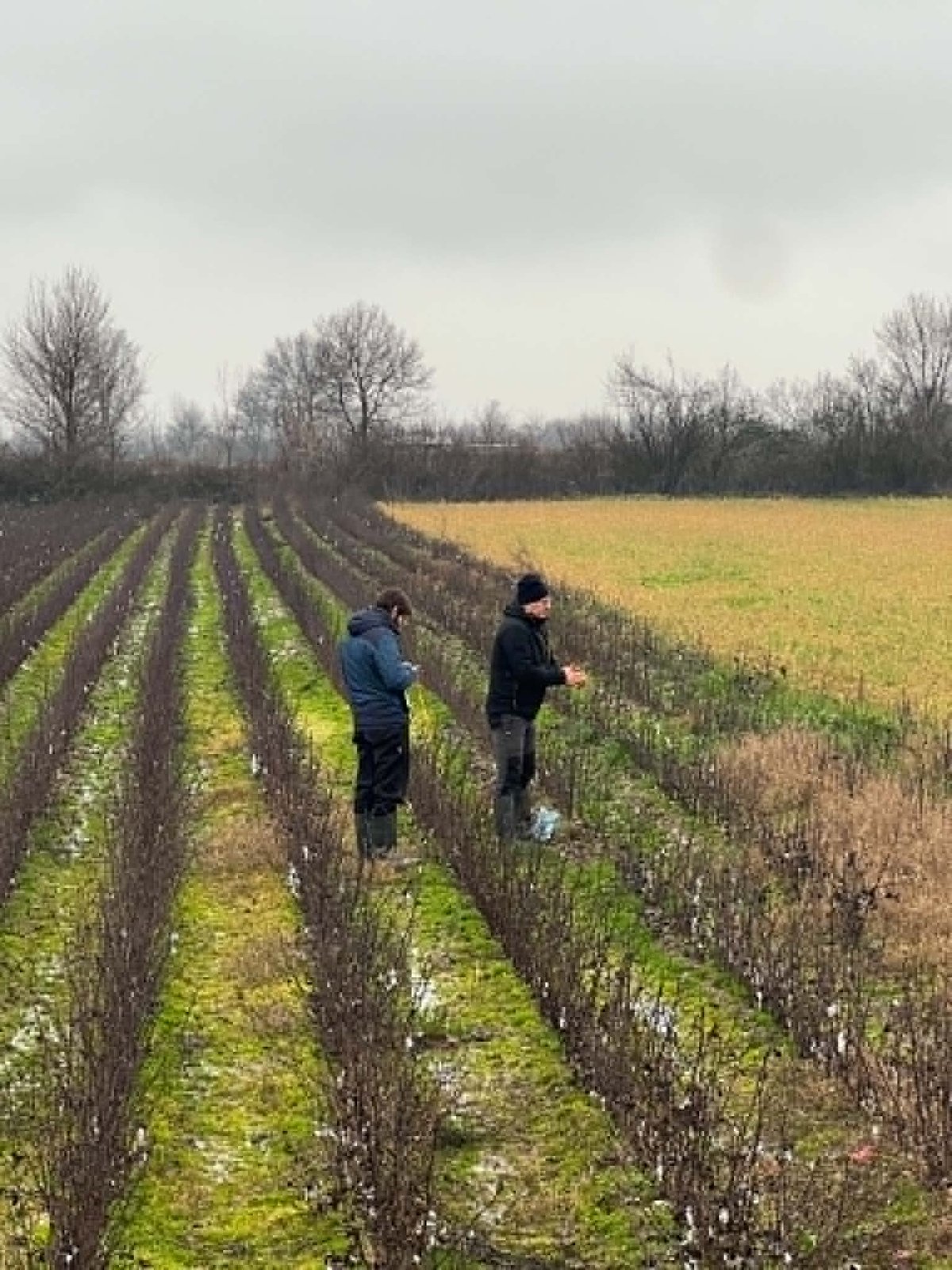
The team then went out into the field, surveying land use, cropping patterns and irrigation methods, and carrying out in-situ soil characterisation and sampling. Those samples go to the laboratory, where they are used to calibrate the parameters of the hydrological models.